How Much Does It Cost to Install a Chain Link Fence in Minneapolis?
October 20, 2026 · 7 min read
Chain link is priced by the linear foot. Five things move that number: total footage, fence height, finish, gate count, and the ground the fence has to cross. A 40-foot side yard on flat turf is not the same job as a 300-foot sloped perimeter. They are never the same price, you know.
We are a top-rated fence company in Minneapolis that measures all five on site before quoting. That is why our figure holds once the crew arrives. Every install carries a 10-year labor warranty plus the manufacturer warranty on materials. Ask any contractor to walk you through those five factors before you accept a number, and notice whether they can.
What Sets the Price of a Chain Link Fence in Minneapolis?
Linear footage is the largest single driver, and it’s also the one homeowners tend to underestimate. People picture the back property line and forget the two side runs that connect it to the house.
Walk the perimeter with a tape measure before you call anyone. That rough footage number just turns a vague quote request into a useful conversation.
Everything else scales off that footage. Height decides how much mesh and post length each foot consumes. Finish sets the per-foot material rate, and gates add fixed costs wherever they land.
Ground conditions change the labor hours rather than the materials. Two neighbors with identical plans can land at a bit different totals because one yard has a rock shelf eighteen inches down. No online calculator can price that, which is why our fence installation services begin with a quote from the yard instead of from a form.
How Does Fence Height Change the Cost?
Residential chain link in the Twin Cities runs mostly at 4, 5, and 6 feet. A 6-foot fence is not fifty percent more expensive than a 4-foot fence. It does carry more mesh per foot, longer posts, and deeper holes to hold the added load. The step from 4 to 5 feet is modest, but the step from 5 to 6 feet is where most of the increase sits.
Choose height on function rather than budget, because the wrong height gets replaced early. Four feet handles most small and medium dogs and marks a boundary cleanly. Five and six feet are what we install most often for pet containment. That is particularly true for dogs that jump, or for yards backing onto open space.
Commercial perimeters go taller again. If your dog has already cleared a fence somewhere else, say so during the site visit rather than after the quote. Maybe it was a neighbor’s fence, maybe your last house, it all helps.
Is Black Vinyl-Coated Chain Link Worth the Extra Cost?
Galvanized chain link carries a zinc coating over steel wire. It is the lower-cost finish per linear foot. Black vinyl-coated adds a PVC layer over that same galvanized wire, which costs more because the coating is an extra manufacturing step. Both finishes come in 4-, 5-, and 6-foot heights, and both hold up through Minnesota winters.
The coating buys two things. It reads as a darker, more finished line across a yard. It also puts another weather barrier between the steel and the moisture that sits in fence lines every spring.
Whether that is worth the premium depends on where the fence sits. A back perimeter screened by trees rarely justifies it. A front or side run that everyone sees usually does.
| Factor | Galvanized | Black vinyl-coated |
|---|---|---|
| Cost per linear foot | Lower | Small premium |
| Appearance | Silver, utilitarian | Darker, recedes visually |
| Weather protection | Zinc layer | Zinc plus PVC layer |
| Common use | Back perimeters, commercial | Front and side yards |
Wondering if a black finish makes sense for the front of your Minneapolis yard? Give us a call at (612) 310-4279, and we’ll walk you through which finish fits your lot before you commit to anything.
How Much Do Gates and Add-Ons Affect the Total?
Gates are priced per unit rather than per foot. Each one carries hardware, heavier posts, and more labor than the run it interrupts. A single walk gate is a modest addition to a residential total. Drive-through and double gates cost considerably more, because the posts on either side carry a swinging load through years of freeze and thaw.
Gate count is the easiest place to trim a quote. It is also the easiest place to regret trimming one. A yard with one gate at the driveway means hauling the mower, mulch, and bins around the long way for twenty years.
Beyond the gates, chain link fence add-ons move the total too, and privacy slats and windscreens are the two we get asked about most. We talk through gate placement during the estimate, because moving a gate on paper costs nothing. It’s a lot cheaper than moving one once the concrete is set.
Planning a chain link project this season? Walk your perimeter, count your gates, and book a free on-site estimate. We measure the yard, check the ground, and give you a number that covers your property.
Does Terrain Affect What You Pay in Minneapolis?
Sloped and rocky yards take longer to fence, and labor hours show up in the total. On a grade, the fence line has to step down in sections or rack to follow the slope. Both approaches take more setting time than a flat run. Older lots near the river bluffs in Minneapolis, MN throw more of this at a crew than newer suburban plats do.
What sits below grade matters as much as what sits above it. Every post on our installs goes 42 to 48 inches down, below the Minnesota frost line. The ground that freezes and thaws each year cannot push those posts upward.
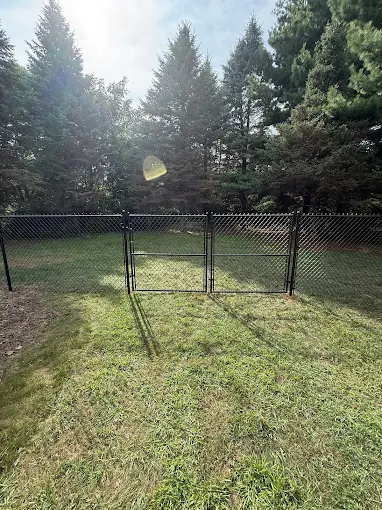
Rock, buried debris, and heavy clay all slow that digging. We also call Gopher State One Call before every dig, which is state law. Marking takes a few business days, so build that window into your timeline rather than your budget.
Do You Need to Budget for a Permit in Minneapolis?
Most fence installations in Minneapolis require a city permit, and the fee belongs in your project budget. Requirements depend on fence height and where the fence sits on the property. A rear-yard fence and a front-yard fence are not always treated the same way.
Fee schedules change, and any figure published in an article ages badly. Check the current fee with the City of Minneapolis before you budget for it, and confirm what your specific height and placement require while you are there. Most of the timeline risk sits in the permit and inspection process, so ask the city how long each step usually takes.
We go over permit responsibility with every customer during the estimate. If your property sits under an HOA, that approval runs separately and often has its own timeline. That one can kind of sneak up on people.
How Do You Get an Accurate Number for Your Yard?
An on-site estimate is the only way to get a figure that survives contact with the job. Footage gets measured rather than guessed. The ground gets checked, gate positions get decided, and the finish gets chosen based on what the fence will sit next to. Our estimates are free and carry no obligation.
Financing is available through Hearth for qualifying projects. Options include zero-interest plans, funding within one to three days, no prepayment penalties, and no home equity required. You can check personalized monthly payment options without affecting your credit score.
For homeowners spreading a larger perimeter across a budget year, that is often what makes the right height affordable rather than the compromise version.
Frequently Asked Questions
Chain link is priced per linear foot. The total depends on footage, height, finish, gate count, and terrain. A short flat side yard and a long sloped perimeter sit far apart in price. A free on-site estimate is the only way to get a figure that reflects your property rather than an average.
Chain link is generally the lowest-cost of the three fence types we install. It comes in below vinyl privacy and ornamental steel. What it buys is durability and containment rather than privacy. Homeowners who want screening usually compare slatted chain link against a solid vinyl panel before deciding.
Height adds mesh, post length, and hole depth to every linear foot, so it does raise the total. The step from 4 to 5 feet is modest. The step from 5 to 6 feet carries more of the increase. Choose height on what the fence needs to contain rather than on price.
We set posts 42 to 48 inches below grade on every installation, which puts them under the frost line. Posts set shallower than that heave upward through freeze and thaw cycles. A single heaved post pulls the whole run out of line within a few winters.
Most fence installations in the city require a permit. Requirements are tied to height and placement on the property. Fees change, so confirm the current schedule with the city before budgeting. We go over permit responsibility with every customer during the estimate.
Contact Us for a Free Chain Link Estimate
Devon handles estimates personally and is on site for the installs. The person who quotes your fence is the person who builds it. There is no sales handoff and no subcontracted crew arriving on the day. We serve Minneapolis and the wider Twin Cities metro across Anoka, Carver, Chisago, Dakota, Hennepin, Ramsey, Washington, and Wright counties.
Book your free on-site estimate today. Just contact us with your rough footage and gate count, and we will schedule a visit.
Phone: (612) 310-4279
Email: hello@compassfenceco.com
Address: 2024 Diamond Ln, Hugo, MN 55038
Hours:
- Mon to Wed: 9:00 AM to 8:00 PM
- Thu: 7:00 AM to 8:00 PM
- Fri: 7:00 AM to 7:00 PM
- Sat: 9:00 AM to 2:00 PM
Related Topics:
